The Pollock Effect
A theory about why bad rooms makes good friends

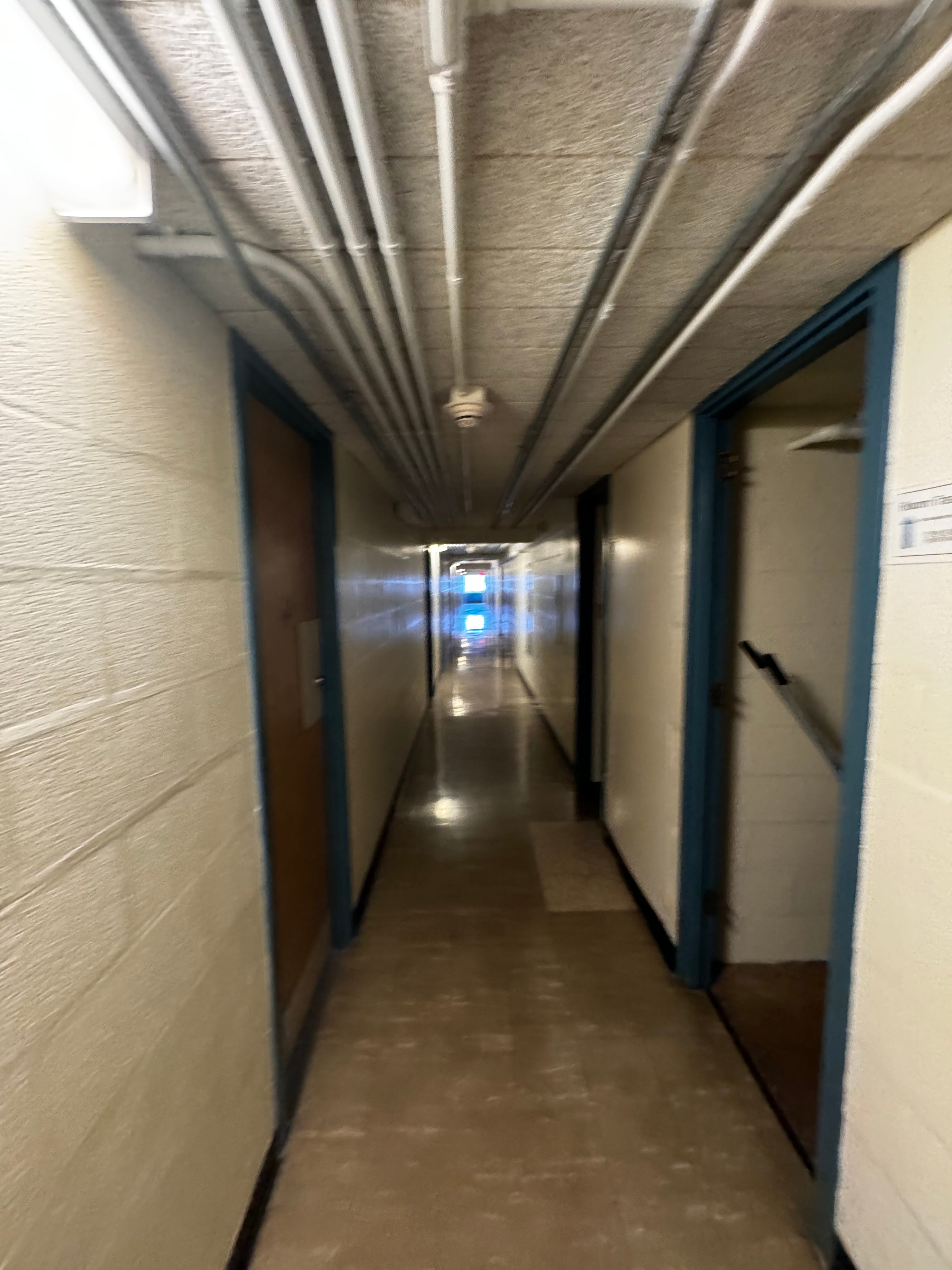
My freshman year at Penn State, I lived in Pollock Halls. They were old, unrenovated dorms near the middle of campus. No A/C, bad lighting, uncomfortable bed, pretty standard freshman dorm stuff.
That was also the year I socialized the most.
And I mean that pretty literally. I knew more people and hung out more often than I have in any year since. A lot of it happened in the common computer lab. People would show up there to do work or play games, and you’d end up talking to whoever was around. I would meet more people at Pollock Commons events, board game nights or at the eSports Center, where I’d say I was going for an hour and leave four hours later.
For a long time I figured it was just a freshman thing. You don’t know anyone, so you go out and meet people. Standard freshman year story. But I think that’s only part of it. The other part is that my room sucked.
If my room had been renovated, with A/C and good lighting and a real bed, I’m pretty sure I would have stayed in more. I would have worked there, watched stuff there, scrolled there. The computer lab in the building would have lost its appeal because my own setup would have been better. Going to a Commons event would have felt like effort instead of a way to get out.
I’m calling this the Pollock Effect, partly because that’s where I noticed it, and partly because the name has a second life I’ll get to in a minute.
The cleanest way to describe it is through what the sociologist Ray Oldenburg called third places: the cafes, parks, libraries, and lounges that sit between home (first place) and work or school (second place). Third places are where casual community happens. The idea I keep landing on is that a bad first place creates demand for third places. When your room doesn’t hold you, the rest of the world has to.
I’m seeing it again now, a few years later, after moving to Queens. The apartment is fine. Small, expensive, mid in the ways New York apartments are famously mid. And almost every day I find myself on the train to Manhattan to work from a cafe, or to meet someone, or just to walk around. I used to think this was a “new city” thing, like I was still in tourist mode. But I think the pattern is holding. The city is functioning as my living room. The apartment is just where I sleep and keep my clothes.
You hear this about a lot of dense cities. Paris, Tokyo, Hong Kong. People who live there don’t entertain at home, partly because they can’t. The cafe is the dining room. The park is the backyard. The street is the hallway. It’s not a deprivation story. It’s just a different distribution of where life happens.
Which brings me to the second Pollock. The painter.
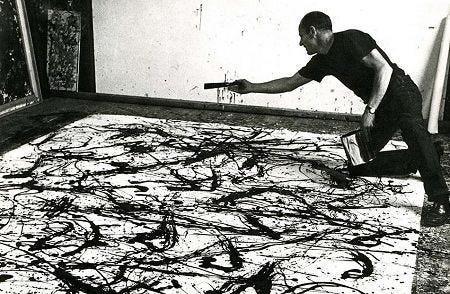
Jackson Pollock famously couldn’t make his big drip paintings standing at an easel. He had to lay the canvas on the floor and walk around it, dripping from the outside. The art only existed because he stepped out of the traditional frame of where painting was supposed to happen. And his compositions are what critics call “all-over”: there’s no center, no focal point, no main subject. The energy is spread across the whole surface.
I’m honestly pretty proud of how the name worked out: Pollock the dorm and Pollock the painter, both pointing at the same idea by complete accident.
I think that’s the right metaphor for what I’m describing. When the center doesn’t hold, when your room or your apartment or your first place isn’t doing the work, life becomes all-over. You move around it. The good stuff happens in the periphery.
This isn’t universal. Some people would socialize the same amount regardless of where they live, and some people in bad rooms just get miserable instead of social. But for me, the pattern holds. The years I spent the most time with people were the years my place was kind of bad. The years I stayed in were the years my place was nice.
So that’s the Pollock Effect. If your room is comfortable enough, you stay in. If it’s not, you go out. Freshman year my room wasn’t comfortable, so I went out, and that’s where everything happened. It explains way more about why that year felt the way it did than I used to think.
~ pranav